
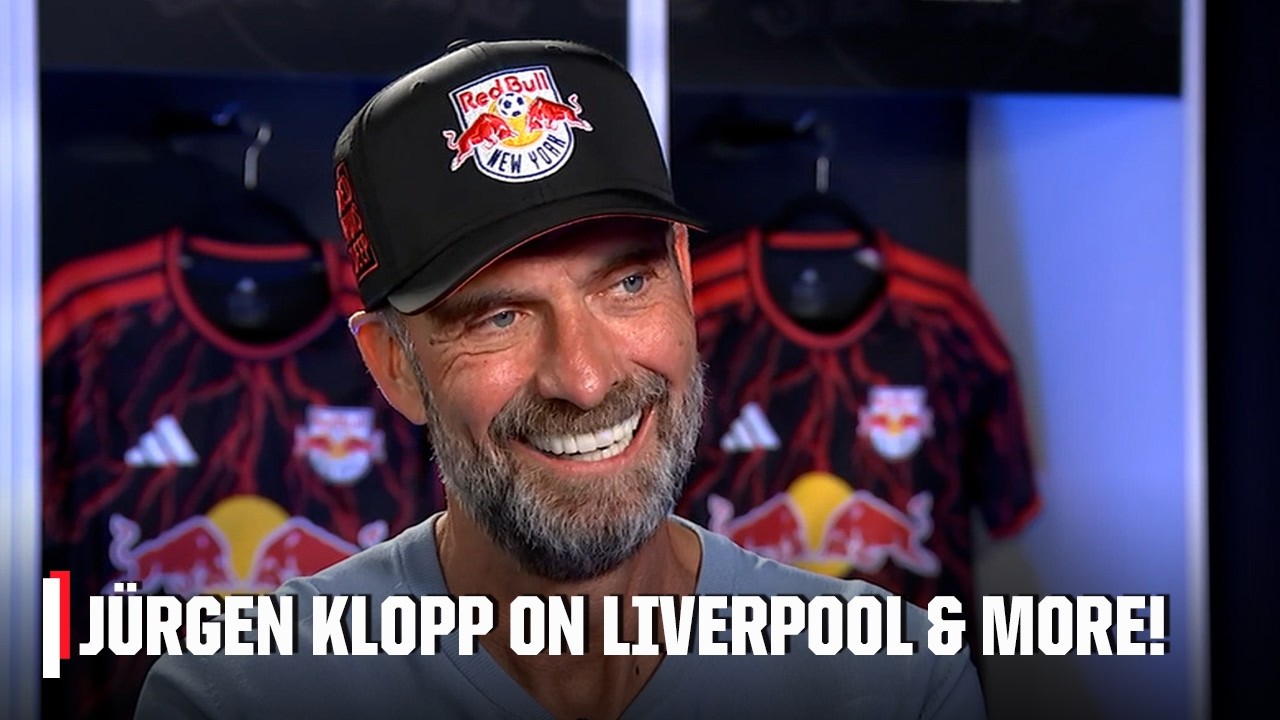
Football never stands still, and neither do the people who live it properly.
That is probably the easiest way to understand Jürgen Klopp right now. He is no longer living the daily rhythm of touchline management, but he is not exactly slowing down either. His work has shifted from one dressing room to a global football structure, from preparing one team for Saturday to thinking about strategy, coaching identity, player development, academies, and long term direction across multiple clubs.
And if there is one theme that runs through everything, it is this: style matters, identity matters, and success without a clear idea is never enough for long.
What Klopp’s new Red Bull job actually involves
Klopp describes the role as leadership across Red Bull’s football operation worldwide. That means he is involved in the big football questions rather than the minute by minute work of managing one squad.
His focus includes:
- Football strategy
- Playing philosophy
- Coaching direction
- Player development
- Youth academies
- Alignment across clubs
It is a broad job, and he sounds energized by it. Not because it replaces management in a sentimental way, but because it gives him a different angle on the same game.
He is still talking football all day. Just at a different altitude.
Why Martin Demichelis fits RB Leipzig
One of the first practical examples of that role is the appointment at RB Leipzig. Klopp pushed back against the idea that Martin Demichelis is some kind of wild gamble simply because he is not part of the familiar European coaching carousel.
His view is that experience should not be measured too narrowly.
Demichelis has coached for years, played at the highest level, and worked in very demanding football cultures including Argentina and Mexico. In Klopp’s mind, those environments are not soft landings. If anything, they are intense places to learn how to cope with scrutiny, expectation, and pressure.
He also pointed to the style of Demichelis’ teams. That matters more than reputation alone.
Why Red Bull insists on a specific style of play
Klopp’s explanation of Red Bull’s football identity is one of the most interesting parts of the conversation because it is not framed as branding for branding’s sake.
It is presented as a survival mechanism.
His argument is simple. Clubs like Leipzig are often excellent, but they are rarely the final destination in the food chain. If they have a great season, bigger clubs come calling. Players leave. Squads change. Stability gets tested constantly.
That means success cannot depend only on keeping the same stars forever.
Instead, the club needs a repeatable football model. Klopp describes that model in familiar terms:
- ball oriented defending
- high intensity
- collective structure
- a clear way of playing that survives player turnover
This is why coaching appointments matter so much. You are not just hiring someone to chase results for a season. You are choosing someone who can maintain and improve a football language across the club.
Klopp also made clear that Leipzig’s previous season was analyzed carefully. The results may have looked fine on paper, but the bigger question was whether the team played in the right way for where the club wants to go next.
For him, those are not separate things.
No, he does not miss management
Klopp’s answer on this was blunt and almost funny in its directness. He does not miss managing. Not at all.
That is partly because he is busy enough not to sit around romanticizing the old life. Alongside the Red Bull role, he is also working as a pundit during the World Cup, which gives him another way to stay immersed in elite football without carrying the emotional weight of a club season.
That combination seems to suit him. Early starts, global schedules, matches later in the day, analysis in between. It is a different routine, but clearly one he enjoys.
The football Liverpool played was built for winning and entertaining
When the conversation turned to Liverpool, Klopp was typically modest about how much influence his team may have had on the tactical trends that followed.
He did not want to claim ownership of what other teams are doing now, even if some of the intensity and attacking ambition seen across Europe feels familiar.
But he did explain the thinking behind that Liverpool side very clearly.
The goal was never to be stylish for style’s sake. The objective was to win and to make the football worth caring about. In his words, if you are not already the best team in the world, then you need a game model that gives you a chance to beat the best team in the world.
That was the logic behind Liverpool’s aggression, energy, and tempo.
He also made an interesting tactical distinction. Some top sides now use heavy man orientation or full man marking structures. Klopp said that was not really Liverpool’s thing. His teams were more ball oriented in how they defended.
That sounds like a small detail, but it matters. High intensity football is not one single idea. There are different versions of it, and Klopp is careful about that distinction.
What it was really like coaching Mohamed Salah
The section on Mohamed Salah is vintage Klopp because it mixes affection, realism, and a proper understanding of elite attackers.
First, he made it clear that the relationship changed naturally over time. During a working partnership, a manager cannot always act like a player’s best mate. Tough decisions are part of the job. But once that professional pressure passes, what often remains are the memories, and Klopp believes those are stronger than almost anything else.
That is why he talks about Salah now as a friend.
He also shared how much joy he took from seeing Salah succeed internationally with Egypt. There was pride in it, but not ownership. More the happiness that comes from seeing someone you know well continue to do special things.
Why great attackers are allowed to fail
The most revealing part of Klopp’s answer came when he was asked about Salah’s occasional frustrations. Everyone knows the pattern. A player can make the wrong choice, miss a chance, or overplay a moment, and then five minutes later decide the match with something outrageous.
Klopp’s point was that this is not a flaw you coach out completely. It is the price of ambition.
When you work with a player like Salah every day, you do not spend your time demanding sterile perfection. You want him to try things. You want him to take risks. You accept that failure is part of reaching a level that ordinary players cannot reach.
That is a useful reminder in an age of endless slow motion criticism.
Elite forwards are not machines. The players who change games most often are usually the ones willing to attempt actions other players avoid. If you remove that daring, you remove the very thing that makes them decisive.
Klopp’s verdict on Salah was simple:
- he produced extraordinary numbers
- he decided huge matches
- he pushed the team higher
- he remained an exceptional professional
And like every superstar, he was not perfect. He was just far closer to it than most.
On Liverpool after his exit: quality helps, but things still have to click
Klopp was careful not to pretend he has an insider’s diagnosis of everything that happened at Liverpool after he left. He said plainly that he is not close enough to make sweeping judgments.
Still, he offered a useful principle about football management.
Even with a good squad and a very good coach, things have to fit. They have to click. They have to work over time. And, as always, you need a bit of luck as well.
He also referenced difficult circumstances around the club that nobody would have expected and suggested that dealing with those moments can distort a season in ways outsiders do not fully appreciate.
That is a sensible point. Seasons are rarely shaped by tactics alone. There are emotional shocks, injuries, timing, and momentum. Sometimes qualifying for the Champions League is still a strong recovery even if the year feels disappointing by bigger standards.
How Klopp sees Germany at the 2026 World Cup
Klopp’s assessment of Germany was balanced. He thought they had shown quality and mentality in stretches, but he also highlighted how tournament football can turn on tiny emotional margins.
One of his sharpest observations was about motivation.
He said if one team enters a match at 95 percent and the other arrives at 100 percent, those last few percentage points can decide everything. At this level, that final edge is huge.
He used that to explain Germany’s difficult match against Ecuador. Context mattered. The opponent had more immediate urgency, the atmosphere was fierce, and the pitch conditions were poor. He even mentioned how dry the surface felt from pitchside.
That does not excuse a performance, but it does explain how tournament games become awkward very quickly.
His bigger point was that Germany still had the capacity to play much better, and in knockout football that is enough to keep belief alive.
Germany’s identity is still supposed to be exciting football
When asked about the future identity of the national side, Klopp did not try to speak like a federation official. He answered more like a fan.
What does he want from Germany? Exciting football.
And he thinks that has already existed more often than people admit. One bad result can distort the conversation, but he reminded everyone that there had been a strong run before that setback.
At the same time, he did not ignore the wider question of talent production. Germany has a very good team, he said, but maybe not the same depth of elite options as in certain peak generations. That is not solved overnight. It takes years, structure, and development work.
That ties back neatly to his Red Bull thinking. Identity is not just about slogans. It is about producing enough players who can carry it.
Why France are terrifying, and why that still does not settle anything
Klopp was full of respect for France, especially their depth.
His reaction was basically this: when a nation can leave world class players out of the starting team and still look loaded everywhere, you are dealing with something unusual. That kind of squad strength changes the whole feel of a tournament.
But he was just as clear on the other side of it. The best team does not always win.
That is one of the reasons knockout football is addictive. Quality matters, but desire, cohesion, timing, and emotion all matter too. The door is never completely closed.
If a slightly less talented side is sharper, braver, and more committed in the right moment, the game becomes open again.
The United States might have their best team ever
Klopp sounded genuinely impressed by the United States.
His main argument was about where the players are coming from. This is not a team built on local promise alone. It is a squad with players developed and tested in major European leagues, including the Premier League, Serie A, Ligue 1, and beyond.
For him, that matters because it changes the baseline level of the side. You are no longer talking about a team that hopes to keep up physically or emotionally. You are talking about one with real individual pedigree.
He also had praise for Mauricio Pochettino, calling him a top coach for that group.
But admiration came with a warning. As the team progresses, the pressure grows. It is easy to enjoy the ride early in a tournament. It is harder when expectation starts following every result.
That is the next test for the United States.
Mexico’s challenge is turning home emotion into useful pressure
Klopp was in Mexico City for the opening game and clearly loved the atmosphere. He described the buildup as outstanding, with supporters arriving hours in advance and the whole occasion carrying that unmistakable host nation electricity.
He understands the power of passionate support, but he also knows it can become complicated if expectations drift too far from reality.
His basic framework for pressure is helpful:
- If public expectation matches the team’s realistic potential, the pressure can be positive.
- If the public demands something beyond the squad’s level, the pressure becomes destructive.
So if the mood around Mexico is hopeful, ambitious, and connected to what the team can genuinely achieve, that is healthy. If it turns into a demand to win the whole tournament regardless of the level of opposition, that becomes difficult to carry.
He felt the energy around Mexico was in a good place. The supporters were dreaming, and the players were dreaming too. That alignment matters.
Canada have less external pressure, but they will not lack internal drive
Canada, in Klopp’s eyes, sit in a slightly different emotional space from the United States and Mexico. There is less inherited expectation around football, which can be a gift.
But he also pointed to Jesse Marsch as someone who will make sure the team does not become passive just because the country’s pressure is lighter.
Klopp knows Marsch well and expects him to push, demand, and create edge from inside the camp.
He also made an amusing side point that Canada is still known globally as a hockey country. The implication was obvious: if football can capture more of that sporting energy in summer, there is room for real growth.
That is one of the bigger World Cup storylines in North America. The tournament is not just about who wins it. It is also about what it leaves behind in the culture.
Why the World Cup is better when nobody knows the ending
Klopp rattled off a long list of nations that had impressed him: the United States, Canada, Mexico, Norway, Belgium, Switzerland, Holland, Spain, France and others.
That was not indecision. It was the point.
The best thing about a tournament like this is that certainty never fully arrives. Strong teams can look brilliant one day and strangely human the next. Tactical plans fail. Opponents surprise you. One awkward match can change the bracket and the mood.
That unpredictability is what keeps the tournament alive.
If everyone already knew the champion with five rounds still to play, there would be no magic in it. Instead, football keeps producing arguments, surprises, and new possibilities.
And usually, by the end, the champion still feels deserved.
No quick fixes for football’s rules
When asked if he would change anything about the World Cup, Klopp refused the easy hot take.
He said he had not thought deeply enough about it and did not want to fire off an answer just because the format invited one. Given how quickly football comments travel now, that restraint was probably sensible.
The broader point is worth noting. Not every football discussion needs an instant reform proposal. Sometimes the smartest answer is that the game, as it is, still works.
He pays for teams and patterns, not only individual stars
Klopp was also asked which player he would pay to watch, aside from the obvious names like Lionel Messi or Kylian Mbappé.
His answer revealed a lot about how he sees football.
Of course he loves genius, and he made it clear that watching Messi is a joy in itself. But in general, he is drawn more to collective patterns, combinations, and how a team functions together than to one man theatre.
That does not mean he undervalues stars. It means he loves the game as a system.
That is a coach’s eye. Great individuals matter most when they lift and fit a great collective.
If he could choose one more match, Anfield would still pull at him
The final question was a good one: if he got one more game to manage, what would he take?
A World Cup knockout tie? A Champions League final? One more European night with Liverpool?
Klopp laughed through the options, dismissed the idea of choosing a quarterfinal over a semifinal, and joked about having already played enough Champions League finals.
But when the idea of another European night at Anfield came up, something landed.
He called it super special. Then he added a lovely twist: maybe the even better experience would be standing in the crowd one day, unrecognized somehow, and feeling it like everybody else.
That probably tells you all you need to know about what he values most in football. Not status. Not nostalgia for its own sake. Just the feeling.
The bigger idea running through all of it
Across club football and international football, Klopp kept returning to the same truths.
- You need a clear identity.
- You need football that gives you a chance against better resources.
- You need players brave enough to fail while chasing greatness.
- You need expectations that match reality.
- You need a little luck.
And above all, you need the game to stay alive with possibility.
That is why he sounds so comfortable in this phase of his career. He may not be picking the team on a Saturday anymore, but he is still in the middle of the most interesting questions football has to offer.
How should a team play? How do you build something that lasts? What makes pressure useful instead of crushing? Why do some players change everything? Why do tournaments refuse to follow the script?
Those are still Klopp questions.
He just has a wider stage to ask them on now.